Underground hydrogen storage project secures £500,000 backing
12 June 2025
National Gas and Edinburgh-based engineering firm Gravitricity have secured £500,000 from Ofgem’s Strategic Innovation Fund to develop an underground hydrogen storage system capable of holding 100 tonnes of green hydrogen.
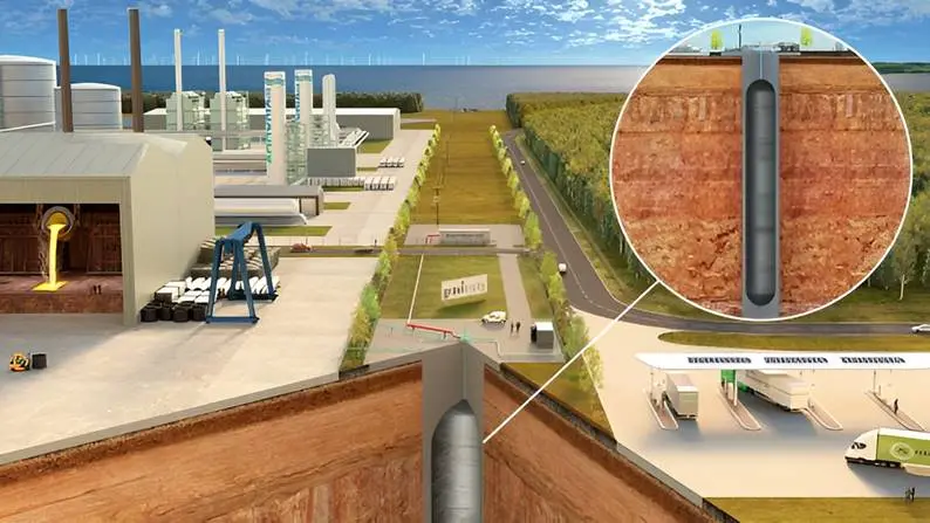
H2FlexiStore will design and model a new form of hydrogen storage using purpose-built lined shafts located close to centres of demand. Unlike traditional salt cavern storage, which is geographically limited, this method could allow for more flexible placement across the UK, enhancing energy security and supporting the shift to a hydrogen-powered economy.
The funding builds on a feasibility study conducted in 2024 by National Gas, which identified H2FlexiStore as the most viable solution for flexible hydrogen storage. The initiative is being carried out in partnership with organisations including Southern Gas Networks, Guidehouse, the University of Edinburgh, Energy Reform, and Premtech. The design phase is due to be completed by the end of the year, with a demonstration phase planned for 2026.
According to Gravitricity, each shaft would store pressurised hydrogen at 200 bar, holding up to 3.3 GWh of energy. This is equivalent to powering hydrogen fuel cell vehicles for 10 million miles. The technology is also expected to help manage fluctuations in hydrogen supply and demand within the network, a process known as linepack management.
Martin Wright, co-founder and executive chairman of Gravitricity:
“Given the strategic need for grid-scale energy storage both nationally and internationally, it is crucial that enabling hydrogen storage technologies such as H2FlexiStore are commercially mature in time to offer cost-effective resilience within current and future energy systems.”
Kevin Shillinglaw, innovation analyst at National Gas, adds:
“This project is a critical step forward in ensuring the UK’s gas networks are ready for a hydrogen-powered future. By embedding resilience with operational hydrogen storage directly into the transmission system, we can maintain operational flexibility, reduce costs for consumers, and support the decarbonisation of heat and power.”
The storage system is designed to integrate with existing infrastructure, complementing efforts such as Project Union, which seeks to repurpose parts of the UK’s natural gas transmission system for hydrogen use. The project may also support Scotland’s long-term hydrogen strategy, which anticipates producing 3.3 million tonnes of green hydrogen annually by 2045.
If successful, H2FlexiStore could become a scalable solution for international hydrogen storage needs, contributing both to the UK’s net-zero targets and to the global development of hydrogen fuel infrastructure.
Image credit: Gravitricity