
UK Budget announcements supporting decarbonisation
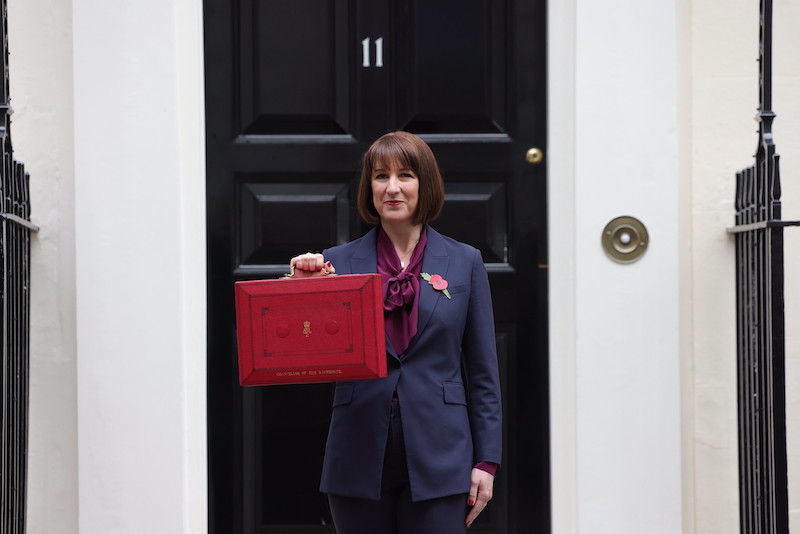
Chancellor Rachel Reeves has delivered the much-anticipated autumn Budget, with a number of energy-related commitments aimed at supporting homes, business and industry in transitioning to low-carbon technologies.
Here’s a summary of some of the highlights:
Warm Homes Plan Funding:
Allocation of £3.4 billion over the next three years for home energy efficiency and low-carbon heating, especially in the form of heat pumps. £1.8 billion is specifically aimed at addressing fuel poverty and lowering household energy bills
Boiler Upgrade Scheme:
Increased funding to support grants for air source heat pumps due to rising demand as well as £1 billion earmarked for next year to grow the UK’s heat pump manufacturing supply chain.
Public Sector Building Decarbonisation:
Allocation of £1 billion to fund local energy schemes to decarbonise the public estate.
National Wealth Fund:
Launch of the UK’s first national wealth fund, investing more than £70 billion into British clean energy and growth industries, including battery factories, ports, and green hydrogen production.
Electric Vehicle (EV) Initiatives:
Continued company car tax incentives for EVs from 2028 and £2 billion allocated for UK EV manufacturing.
Homes Standards:
Commitment to building 1.5 million new homes with a focus on future-proofing through standards to avoid future retrofitting.
Investment in Renewable Energy and Clean Technology:
Emphasis on significant funding for clean energy projects, including nuclear power and green hydrogen production.
Industry response
Responses to the budget have highlighted both optimism and concerns regarding the proposed measures.
David Cowdrey, acting chief executive at the MCS Foundation:
“Measures to support energy efficiency and the manufacture and installation of heat pumps are very welcome. Heat pump deployment has accelerated recently with the help of government funding in the form of the Boiler Upgrade Scheme, so it is encouraging to see this success recognised with additional funding.
“Nevertheless, the UK is still lagging at the bottom of European league tables for heat pump deployment. We need a comprehensive set of funded policies to remove barriers to the rollout of heat pumps, including moving social and environmental levies off electricity bills to reduce costs.”
Yselkla Farmer, CEO of BEAMA:
“The Chancellor’s budget has stepped up urgently needed investment tackling the UK’s key decarbonisation heating and transport challenges. Reaffirming the £3.4bn Warm Homes Plan investment is positive but it is essential the government fleshes out the practical details of its approach with cost-effective, impactful measures such as on heating controls and improving indoor air quality to protect health. The government urgently needs to grasp the nettle on trickier details that will drive decarbonisation in people’s lives.”
Caroline Bragg, CEO of the Association for Decentralised Energy:
“The overall fiscal climate is difficult, but it is encouraging to see a renewed focus on investment in infrastructure. The UK Infrastructure Bank struggled to achieve the mandate it was given, and it was disappointing to see almost no investment by the Bank in heat networks.”
Daniel Särefjord, Aira UK CEO:
“”The new funding for the Boiler Upgrade Scheme demonstrates the government’s commitment to supporting households in achieving lower energy bills, greener homes, and enhanced energy security. With heat pump installations hitting record levels, it’s evident that more consumers are seeking sustainable alternatives to gas boilers. The Budget outlines a vision for transforming homes nationwide and this historical change will be achieved by modernising planning policy, shifting taxes from electricity to dirty fossil fuels and renewing the nation’s dedication to net zero. I hope this budget marks an exciting moment for green energy initiatives and clean energy-tech adoption in the UK.”
Giles Hanglin, CEO of Apatura Energy:
“To realise the new Labour government’s plans to make Britain a clean energy superpower, we must think about the circular economy. It’s reassuring to see such investment in a cleaner future; however, funds alone do not secure a clean future for the country. A circular economy lasts longer than a prime minister’s term in office.
“If implemented appropriately, we believe today’s budget could be labelled the ‘greenest budget in UK history’, a step towards a world fully powered by clean, renewable energy. But this budget is about much more than the environment: it’s a huge step towards energy independence and futureproofing our resources.”
Russell Dean, deputy divisional manager, living environmental systems at Mitsubishi Electric:
“Decarbonising the built environment is vital for the UK to reach its ambitious goal of net-zero carbon by 2050, and changing how we heat the UK’s housing stock will be instrumental in this. This Budget was the new Labour government’s opportunity to demonstrate its commitment to clean energy and decarbonisation, and the investment into Great British Energy and the Warm Homes Plan is a welcome step. But we urge the government to go further in outlining a clear, long-term strategy to reach net-zero.
“The government’s commitment to building 1.5 million new homes is welcome, but these new homes must be future-proofed, through initiatives like the Future Homes Standard, and not need retrofitting in just a few years as standards change. We must also do more to convey urgency around the need for house builders to prioritise renewables now.
“We also call for a rebalancing of electricity levies or the decoupling of the price of electricity and gas, to bring down the price of electricity and make all-important renewable technologies, like heat pumps, a more affordable option for homeowners.”
Michael Wynne, director of sustainable housebuilder Q New Homes:
“Over £5billion has been pledged towards the government’s housing plans. An increase in funding to build thousands of affordable homes and social housing is welcome news to many. However, it is critical that affordable housing is built with the latest technology in home insulation and energy efficiency so that the mission to tackle fuel poverty is also taken into account. A commitment for homes to be built with clean energy sources ensures that residents enjoy the lowest possible energy bills.”

