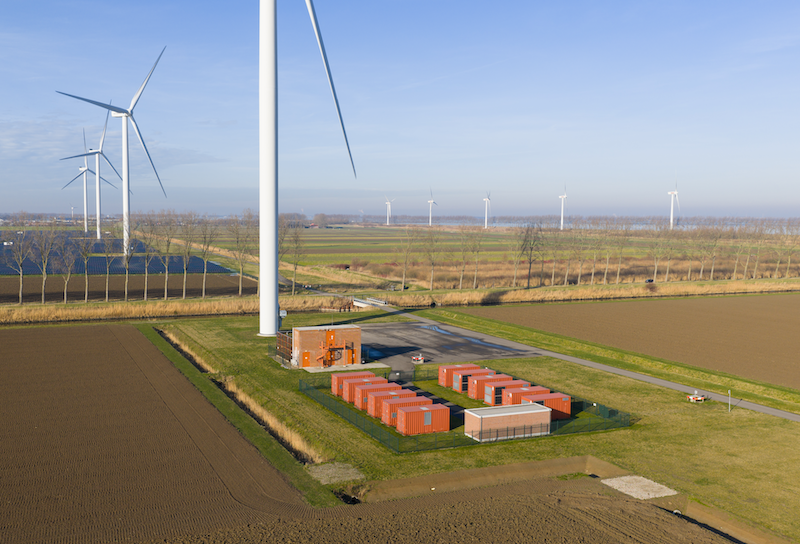
Renewables with battery storage can undercut fossil fuels
7 May 2026
Solar and wind power combined with battery storage can now provide round-the-clock electricity at lower cost than some new fossil fuel plants, according to a new report from the International Renewable Energy Agency (IRENA).
The findings challenge long-standing concerns about the reliability of renewable energy by arguing that hybrid systems can already deliver continuous power in regions with strong sun or wind resources.
The report found that solar power paired with battery storage costs between 54 and 82 US dollars per megawatt-hour in favourable regions. That compares with estimated costs of 70 to 85 dollars for new coal-fired power in China and more than 100 dollars for new gas-fired generation worldwide.
Battery storage costs have fallen sharply over the past 15 years, helping to drive down the overall cost of renewable systems. Solar installation costs have dropped by 87% since 2010, while onshore wind costs have fallen by 55%. Battery storage costs declined by 93% over the same period.
The report argues that renewable systems can reduce exposure to volatile oil and gas markets during geopolitical disruptions affecting energy supplies.
Hybrid renewable systems are also presented as increasingly suitable for industries requiring uninterrupted electricity, including artificial intelligence and data centres. Construction times are typically shorter than for new gas-fired power stations, with many projects completed within one to two years after permits and grid connections are secured.
Further cost reductions are expected over the next decade as manufacturing capacity expands and technologies improve. The report estimates that the cost of continuous renewable electricity at the best-performing sites could fall below 50 dollars per megawatt-hour by 2035.
Francesco La Camera, IRENA director-general:
“The long-standing argument that renewables lack reliability no longer holds. Today, renewables can deliver reliable, round‑the‑clock power. As oil and gas markets remain exposed to geopolitical shocks, including ongoing disruptions in the Strait of Hormuz, we must insulate our economies with resilient renewable systems. The economics of the entire energy system have shifted: the battery revolution has driven down costs while acceerating advances in storage. The advantage of renewables is not only economic but strategic, strengthening resilience, stability, and energy security in times of crisis.”
Read the full report.