Public sector to benefit from £553m efficiency upgrade fund
Hundreds of public buildings across England will be upgraded with low carbon heating and energy efficiency measures under £553 million in new government funding.
The Department for Business, Energy & Industrial Strategy says these measures will save local authorities and public bodies around £650 million per year on energy bills over the next 15 years.
Buildings such as hospitals, schools, libraries, and museums will benefit from the installation of low carbon heating systems, including heat pumps and electric heating. Many projects will also specify energy efficiency measures, such as wall and roof insulation, double glazing and LED lighting, and renewables such as solar panels.
The funding, which comes through the Public Sector Decarbonisation Scheme, will see 217 clean heat and energy efficiency projects installed in 160 public sector organisations, including Birmingham Children’s Hospital, Manchester Fire and Rescue, and historic venues at the Royal Botanic Gardens, Kew.
The West Midlands is set to receive the largest share of the Public Sector Decarbonisation Scheme fund, with a grant of £133.9m, followed by the East Midlands, at £103.9m. London places third at £90.8m.
The government is also providing £14m of grant funding in the current financial year through of Phase 3 of the Public Sector Low Carbon Skills Fund. This will put money towards public sector organisations accessing the skills and expertise needed to plan how to decarbonise heating in their buildings, including enabling organisations to develop applications for the Public Sector Decarbonisation Scheme.
There will be multiple opportunities for the public sector to secure funding through Phase 3 of the scheme. Guidance on how to apply for the next round of applications, Phase 3b, will be published in July, with the application window planned to open for applications in September.
“Using cleaner technology to heat our civic buildings is helping to shield public sector organisations from costly fossil fuels, especially at a time of high global prices,” said business and energy minister Lord Callanan. “This funding will bring significant savings of well over half a billion pounds each year by making public buildings cheaper to run, heat and cool, whilst supporting economic growth and jobs across the country.”
The Building Research Establishment (BRE) has been vocal on the need to retrofit Britain’s building stock to help reduce energy bills. Gillian Charlesworth, CEO of the Building Research Establishment (BRE), said:
“The UK has one of the oldest and least energy efficient building stocks in Europe, which unnecessarily inflates demand for natural gas. Accelerating the roll out of retrofit measures like insulation is a short-term solution that could address spiralling bills and significantly improve the energy efficiency of our public buildings. With nearly a fifth of all gas being consumed by the non-domestic sector, a lack of any retrofit strategy will result in higher costs for our businesses and public infrastructure – including schools and hospitals.
“Aside from keeping the public sector’s energy bills down and reducing its carbon footprint, retrofitting public buildings is a fast and cost-effective strategy to reduce demand for natural gas and will help to support the UK’s energy security. However, without a clear plan and funding to upgrade the UK’s building stock, our energy security strategy cannot be driven forward effectively – and we will quickly lose momentum on the drive to net zero.”
Among the projects to be supported through Phase 3 of the Public Sector Decarbonisation Scheme are:
Nottingham University Hospitals NHS Trust is receiving more than £70 million to decarbonise Queens Medical Centre.
Greater Manchester Combined Authority is receiving £15.5 million to install low carbon heating in various notable institutions, including Greater Manchester Fire and Rescue Service, the University of Salford, the National Football Museum and Manchester University.
Hartismere Family of Schools will receive more than £600,000 to install a heat pump and improve the energy efficiency of Somerleyton Primary School in Suffolk, a school which was built in 1845 and still has a thatched roof.
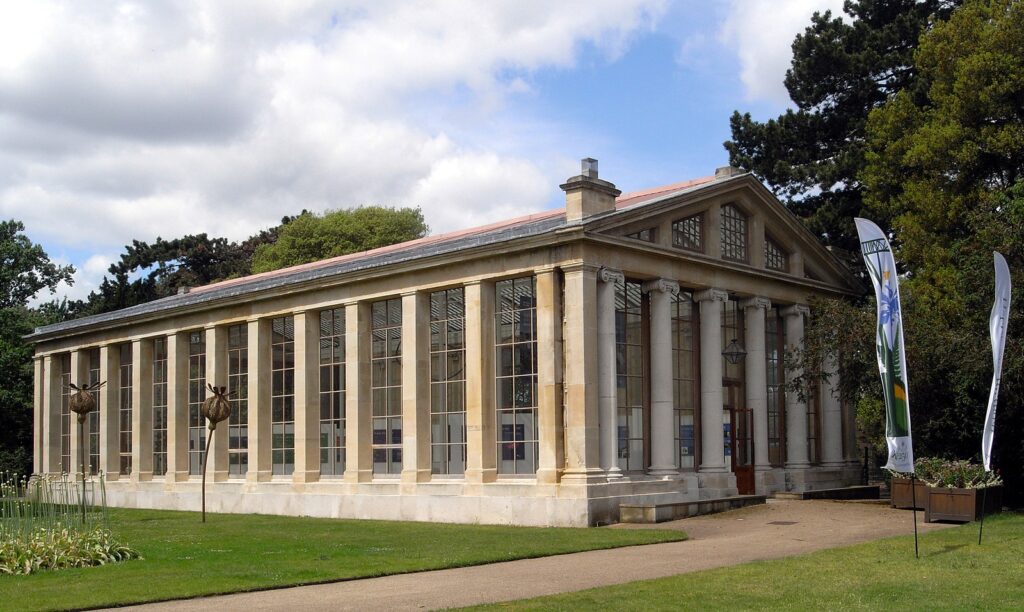
Royal Botanic Gardens, Kew, will invest over £4.4 million to decarbonise the Grade II listed Nash Conservatory (pictured) and Jodrell Laboratory.
Exmoor National Park Authority is receiving £115,000 to install clean heating at Pinkery Outdoor Education Centre, which is off-grid and has no mains gas, electricity or water.
Leeds City Council is receiving £4.3 million to decarbonise 6 primary schools and 4 child day care centres.
Birmingham Women’s and Children’s NHS Foundation Trust is receiving more than £50 million to install clean heating and energy efficiency measures in Birmingham Women’s Hospital and Birmingham Children’s Hospital, while Royal Wolverhampton NHS Trust will be awarded £32 million to decarbonise New Cross Hospital.