Key takeaways from the Autumn Budget
27 November 2025
In Rachel Reeves’s Autumn Budget announcement this week, the Chancellor of the Exchequer outlined changes to how energy costs are funded, cutting levies on electricity bills while ending the Energy Company Obligation. Households are expected to see savings, but questions remain over support for fuel-poor homes and the wider energy transition.
The government will remove £2.3 billion of levies from electricity bills, funded by taxpayers, while abolishing the Energy Company Obligation (ECO) levy, which currently supports energy efficiency upgrades for fuel poor households.
The first move targets the Renewables Obligation (RO), a legacy subsidy introduced in the 2010s to support renewable generation. The government will strip 75% of RO costs from bills, compensating energy suppliers via public funds. The measure is expected to reduce household electricity bills by around £2.3 billion annually for three years from April 2026, with additional benefits for households using electric technologies such as heat pumps and EVs.
The ECO levy, which adds roughly £1.7 billion to bills and funds insulation and clean heating improvements for low-income households, will also be scrapped. While this will further ease energy bills, it removes the main funding source for upgrades for vulnerable households.
The Treasury estimates the average household will save about £150 per year (£88 from RO, £59 from ECO and £7 from VAT), with higher savings for electricity-intensive homes: over £200 for heat pump users and £250 for households with electric storage heaters.
The move to abolish ECO comes amid quality and cost challenges, but it has been central to improving energy efficiency in fuel poor homes. The government plans to deliver £1.5 billion over three years through the upcoming Warm Homes Plan to replace ECO, though this smaller fund raises questions about the adequacy of support.
Industry reaction to the budget has been mixed, reflecting both support for lower bills and concern over the loss of ECO funding. Below, we round up perspectives from across the energy sector.
Ian Rippin, CEO at MCS:
“MCS is disappointed by the decision to end the Energy Company Obligation (ECO4), which will create substantial challenges for businesses, hinder sector growth, and adversely affect some of the most vulnerable households in the country…While parts of the industry are left with significant uncertainty after today’s Budget, MCS is pleased that the Boiler Upgrade Scheme (BUS) has not been impacted.”
Caroline Bragg, CEO of the ADE:
“We welcome the Chancellor’s decisive move to fix the outdated levies that have handicapped clean energy for years – a massive win for both billpayers and our decarbonisation goals that took real political courage. The protection of £13.2 billion for the Warm Homes Plan is another very welcome commitment, providing a crucial foundation for heat networks across the country. However, while families will see costs fall, industry has been left behind. The budget’s neglect of industrial electrification turns its back on hundreds of thousands of jobs.”
Yselkla Farmer, CEO of BEAMA, the trade body for manufacturers of electrical equipment:
“We welcome the government’s focus upon driving down energy bills for UK households, but further measures are needed to ensure that we are creating a sustainable energy system by supporting investment from consumers and businesses with credible, delivery-focused policies that bring the public along with us.
“The scrapping of the Energy Company Obligation and other domestic electricity levies will deliver immediate savings to energy bills. However, without a clear policy on how this essential funding will be replaced within the twice-delayed Warm Homes Plan, the Budget has added further policy confusion as we work towards Clean Power 2030.”
Malcolm Farrow, director of marketing and external Aaffairs at OFTEC:
“Amid the widespread speculation ahead of the Budget regarding a potential VAT cut on gas and electricity bills, our position was clear: if the government acted, it had to be fair and include off-grid homes too. It appears the Chancellor has changed course and focused mainly on reducing electricity bills.
Ed Matthew, UK programme director at the independent climate change think tank E3G:
“Cutting taxes from electricity bills is a crucial step towards helping people to switch to clean energy. But this is overshadowed by the morally indefensible decision to scrap the national home insulation scheme, ECO. This is exactly the kind of sticking plaster politics this government promised to end and fatally undermines the best long-term solution to fuel poverty. It will also cost 10,000 jobs and prevent 1 million families from insulating their homes in the next four years. The Chancellor must reverse this cut and maximise energy savings for the fuel poor.”
Martyn Bridges, director of external affairs at Worcester Bosch, says that the ECO scheme being scrapped will impact manufacturers’ ability to avoid fines under the Clean Heat Market Mechanism (CHMM). He says:
“ECO 4 has fully funded just under 39,000 heat pumps up, an average of around 1,000 appliances a month. In today’s budget, the chancellor announced that ECO will not continue after the 1st April 2026, saving households around £150 annually on their energy bills.
“As these appliances were all eligible to be counted towards the target quota that manufacturers have to meet to avoid fines under the CHMM, then the CHMM targets need re-appraising. Removing on average 12,000 funded heat pumps from the market would potentially result in fines in excess of £6m for manufacturers as they cannot meet their quotas.”
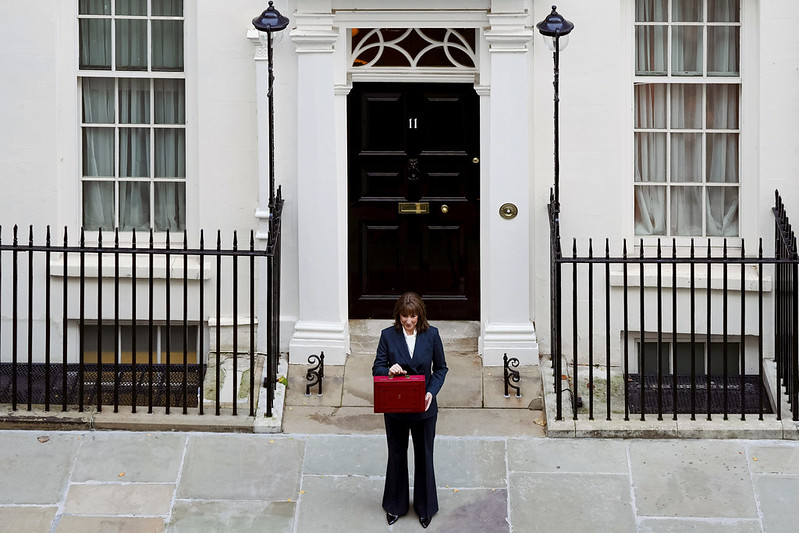
26/11/2025 Chancellor of the Exchequer Rachel Reeves prepares to deliver her Budget from 11 Downing Street. Picture by Ben Dance / FCDO