
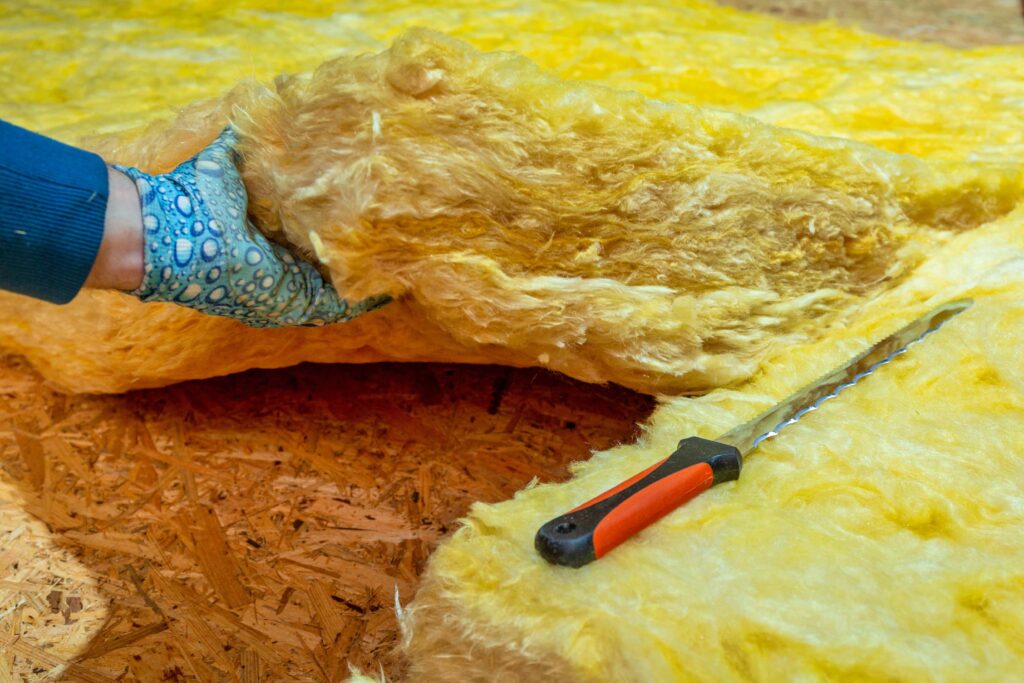
‘Insulation age’ of homes reveals millions woefully out of date
Millions homes across Britain only meet insulation standards of 1976 or earlier, potentially costing their owners hundreds of pounds in wasted energy.
The study, conducted by EDF in partnership with property data platform Sprift, analysed the current levels of home insulation (including floor, roof, window and wall insulation) against building regulations across different time periods to calculate the nation’s ‘Home Insulation Age’.
Experts analysing 21 million homes found 13,916,843 million properties in England and Wales (55%) only meet the insulation standards of 1976 Building Regulations or earlier. These homes predominantly lose heat through inadequate wall cavity insulation, lack of double glazing, insufficient loft insulation and poor floor insulation.
The study found there has been a small improvement in the nation’s home insulation standards over the past two years, with 18% of properties now having an insulation age of 2002 or younger compared to 8% in 2022. However, most of this improvement comes from newer properties, built since 2022 which are required to meet new regulatory insulation standards.
Despite the overall improvement, the average household is living with insulation standards dating back 48 years, with 41% (6,291,448 homes) living in properties that meet the insulation standards set in 1976.
Research commissioned by EDF amongst 2,000 UK homeowners to support the study found that among those who have not upgraded their insulation, 32% cite cost as the primary barrier, while 17% prefer to spend their money elsewhere and 14% are unsure about the type of insulation needed. Additionally, 76% of those who have made improvements since 2020 attribute their actions to the volatility of the energy market over the past three years and concerns regarding potential price increases.
Whilst prices are coming down, energy bills remain on average 56% higher than they were pre-energy crisis, so improving energy efficiency through insulation measures offers one of the biggest opportunities to cut household bills.
According to EDF, the average semi-detached homeowner could save up to £235 a year if they upgraded their cavity-wall insulation, £2255 by having a well-insulated loft, or £3156 a year if they updated their solid wall insulation.
Philippe Commaret, MD for customers at EDF, comments: “It’s clear from this research that, despite the energy crisis, little progress has been made in improving the energy efficiency of older British homes in the past two years, meaning millions of homeowners are missing out on significant savings on their energy bills. Our ongoing efforts to support and improve crucial initiatives such as the Great British Insulation Scheme will help empower customers to embrace energy efficiency so they can save both cash and carbon.”
With three-quarters (74%) of the population stating that they would welcome government support schemes to help improve the energy efficiency of their properties, EDF is calling for changes to the Great British Insulation Scheme to help more customers insulate their homes and save cash and carbon:
• Allowing the installation of more than one measure. Currently only one measure per home is allowed. Allowing multiple measures in homes that require them would help customers lower customers energy bills and carbon footprint, as well as reducing the costs of delivering the scheme.
• Including heating control measures e.g. room thermostats, as a secondary measure for all customer groups (currently only delivered within the ‘low income group’). Heating controls are cost effective to install and can bring a big benefit on bill and usage reduction for households.
• Extending the scheme eligibility to include Council Tax Band E homes in England, which would bring in scope an additional 2.4 million homes – representing an extra 10% of all homes in England. Currently the eligibility criteria is Council Tax Bands A-D. This could open up much needed support to customers, including those on low incomes, struggling with the cost of heating a larger home.

