
IEA says world on track for fossil fuel peak as renewables surge
13 November 2025
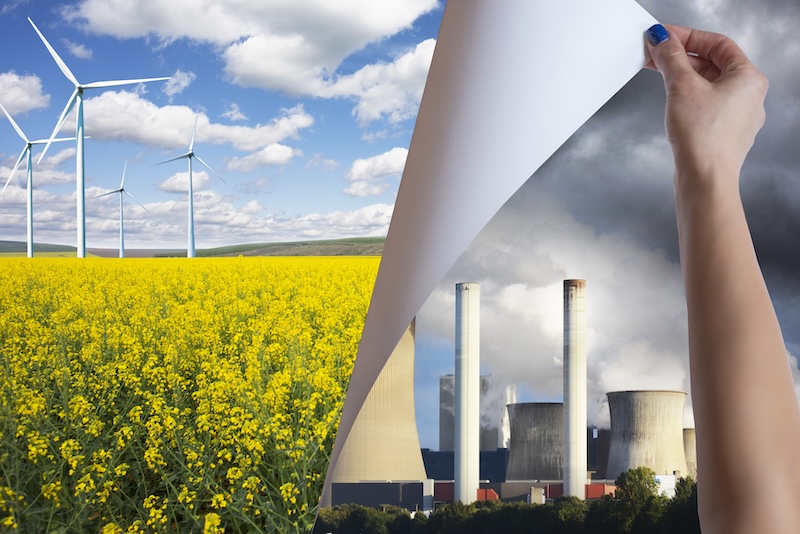
Renewables are expected to overtake oil to become the world’s largest overall energy source in the early 2040s, according to the International Energy Agency (IEA).
The IEA’s annual World Energy Outlook 2025, published at the start of the COP30 climate summit in Brazil, concludes that global demand for fossil fuels is nearing its peak, even as some countries renew political support for coal, oil and gas. The agency’s central “stated policies scenario” – which assumes governments implement the energy and climate measures they have already announced – projects coal use at or near its highest point, oil demand peaking around 2030 and natural gas by the mid-2030s.
Despite this overall shift, fossil-fuel use remains higher than previously forecast. Coal demand in 2030 is expected to be around 6% above last year’s estimate, while oil and gas are likely to decline more slowly than earlier projections, suggesting a gradual rather than rapid transition away from fossil fuels.
At the same time, the IEA anticipates strong growth in low-carbon energy. Nuclear generation is forecast to rise by 39% by 2035, solar power by 344% and wind by 178%. The agency links this expansion to sharp cost reductions since 2010, with prices for solar, wind and battery technologies falling by between 70% and 90%. Renewables are therefore expected to surpass oil as the dominant global energy source in the early 2040s.
If governments carry out their stated policies, the IEA projects global temperatures will rise by about 2.5°C above pre-industrial levels by 2100, slightly higher than last year’s estimate of 2.4°C. A less ambitious “current policies scenario”, in which countries maintain only existing laws and abandon future plans, would see temperatures climb to around 2.9°C. The agency also outlines a “net zero emissions by 2050” pathway, limiting warming to 1.5°C by the end of the century but requiring large-scale carbon removal and a temporary overshoot in temperatures.
The findings come as the UK expands offshore wind capacity and develops new nuclear projects while continuing to issue oil and gas licences in the North Sea. Britain’s target to decarbonise its electricity system by 2035 places it among countries aiming to accelerate the energy transition. The IEA’s analysis offers updated context for those plans, showing how global investment and policy momentum are shifting steadily towards cleaner energy sources.
Responding to the IEA’s report, Frédéric Godemel, EVP of energy management at Schneider Electric says maximising decarbonisation requires boosting efficiency with digital and AI solutions, as much as expanding renewable capacity:
“IEA report highlights a decisive turning point: renewables are expanding faster than any other energy source, capable of meeting nearly all the world’s growing demand for electricity, which is set to rise by 40% over the next decade. But while supply is accelerating, we can’t ignore one of the quickest ways to decarbonise – the demand side. Improving efficiency in the way we manage and consume energy, through digital and AI enabled solutions helps not only reduces waste, but also builds resilience, drive growth and strengthen energy security. As an energy tech partner, Schneider Electric helps accelerate this shift towards smarter, more efficient and more sustainable energy systems.”

