
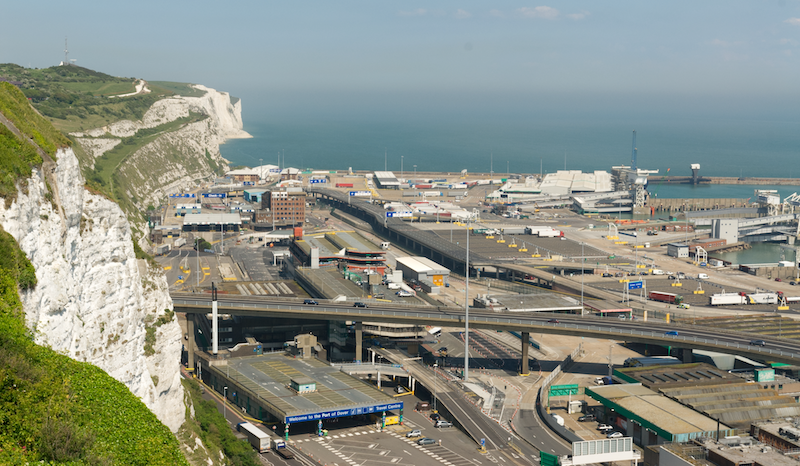
Dover becomes UK’s first net-zero port
16 April 2026
The Port of Dover has announced it has reached carbon net zero emissions for its direct operations, significantly earlier than both industry and government timelines.
Its Scope 1 and 2 emissions for 2025 have been reduced by 98.3% compared with 2007 levels. The achievement follows external verification of emissions data against international standards, including ISO 14064 and the Greenhouse Gas Protocol.
The milestone was achieved through a combination of operational changes, including the use of hydrotreated vegetable oil to power machinery, installation of 1.5MW of on-site solar generation, and wider energy efficiency measures such as switching to renewable electricity and upgrading lighting and heating systems. Remaining emissions have been offset through a locally based regenerative farming scheme certified under the UK Carbon Code of Conduct.
The port reached the target at least five years ahead of other UK port ambitions and 25 years before the UK government’s maritime net zero goal.
Activity in the Dover Strait accounts for around 8% of the UK’s maritime emissions, making the reduction notable for the wider sector.
Chief executive Doug Bannister comments:
“We are proud to be celebrating this milestone moment, which has seen our carbon emissions reduce drastically from nearly 14,000 tonnes 18 years ago. Since setting our goal four years ago, people from across the Port have all contributed to this incredible result.”
“We are not stopping here. We want Dover to be a global leader, putting the UK on the global stage as home to the world’s first high-volume Green Shipping Corridor here on the Short Straits.”
The port has also been recertified under the EcoPorts environmental management standard for the fourth time.
Attention is now expected to shift towards reducing indirect emissions across the wider maritime supply chain, which requires coordination between ports, operators and government.

