Bristol campus links up to pioneering low-carbon heat system
20 October 2025
A major step towards low-carbon urban heating has been achieved in Bristol, with the University of Bristol’s Temple Quarter Enterprise Campus becoming the latest site to connect to the city’s heat network.
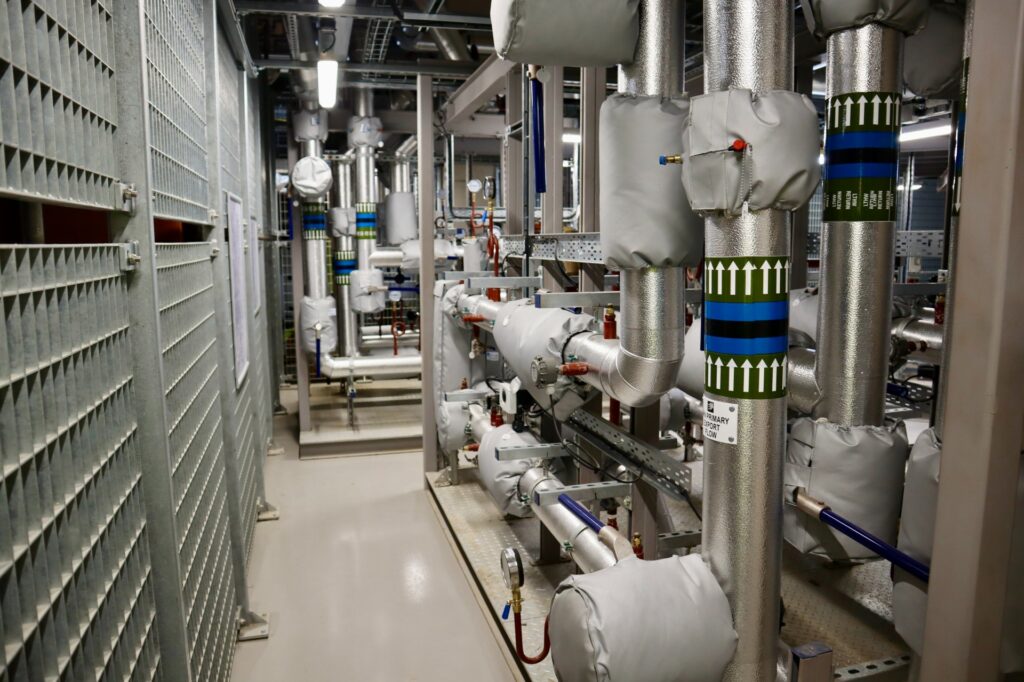
The connection links the university’s new academic building to Vattenfall’s low-carbon system, allowing the site not only to draw heat but also to export it.
It is one of the first buildings in the country capable of sending heat from its own computer servers and cooling systems back into a citywide network, helping to warm other properties and cut carbon emissions. The system is now active, enabling testing and commissioning ahead of the building’s opening to students in September 2026.
Vattenfall, one of Europe’s largest providers of low-carbon heating, delivered the connection in partnership with the University of Bristol. Together, they developed a system that captures and reuses waste heat from the university’s servers to provide heating and hot water for the campus and, in time, for nearby homes and businesses.
As the Bristol heat network expands, the building will begin exporting heat, strengthening the network by adding additional low-carbon sources.
The University’s Academic Building design uses heat pump technology to enable excess heat to be sent into the Bristol heat network, rather than being wasted. This innovative approach is one of the first in the UK and was only achievable through close collaboration and a mutual commitment to delivering world class, low carbon heating solutions.
The project showcases the potential of heat networks to capture, reuse and recycle heat that already exists, reducing energy demand and driving down carbon emissions. It also demonstrates the power of partnership between the University of Bristol, Bristol City Council, Bristol City Leap and Vattenfall.
Dom Barton, director of Bristol Heat Networks at Vattenfall, says:
“We’re delighted to be working with the University of Bristol to provide heating, hot water and cooling to the new Temple Quarter Enterprise Campus. This project shows how versatile and innovative heat networks are, recycling excess heat from a range of different sources like computer servers and using it in the University campus as well as in the citywide heat network.”
Stephen Runicles, interim Temple Quarter Project Director at the University of Bristol:
“We are committed to reducing our carbon emissions and the city-wide Bristol heat network offered an opportunity for lower carbon heat energy that is commercially viable long term. Our approach in the technical design has been to effectively use, capture and reuse heat energy in the building, and to incorporate the capability to export excess heat to the city-wide network in the future as it matures. It has been a long journey for our first connection, and we look forward to a successful long-term relationship.
“I am delighted with how well the team have coordinated and communicated over the last month. An absolute focus at an impressive pace to meet all the testing and documentation requirements – achieving ‘Adoption’ by Vattenfall on Friday, 3 October 2025. Thanks to Vattenfall and the Bristol heat network team, Sir Robert McAlpine, NG Bailey, AECOM, Core Group, Buro Happold, Hermetica Black, Osborne Clarke, Burges Salmon and colleagues at University of Bristol.”