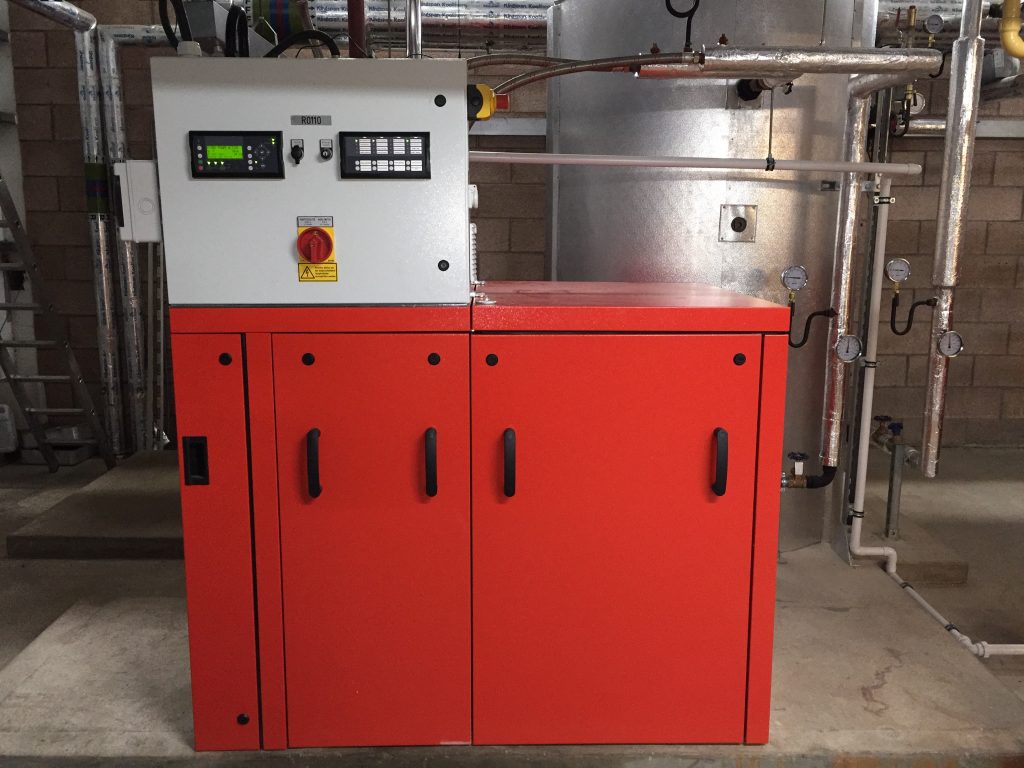
Why CHP still adds up
Efficiency savings, lower cost electricity and improved energy security are just some of the benefits delivered by combined heat and power, says Mark Gibbons
As businesses and organisations start planning for the new normal maximising building efficiency will be high on the agenda to meet environmental commitments.
Yet one of the fastest approaches to unlock savings is often overlooked: retrofit. Retrofit holds the key to significantly reduced emissions in buildings and, as such, plays a vital part in supporting the drive to net zero. When it comes to heat, the challenge is to identify the most appropriate heating solution that will meet each project’s unique requirements and budget.
Where CHP replaces old or inefficient plant in existing buildings, it can typically reduce a building’s energy bills by 30 per cent and carbon emissions by up to 20 per cent compared with conventional heating plant and electricity supplied solely from the grid.
Classified as a low-carbon technology, most natural gas CHP engines nowadays will emit almost zero CO² due to the set-up of the engine and lambda sensors.
Advanced CHP units are also low NOx. Operating in conjunction with a boiler or water heater in a well-designed system, a CHP could reduce NOx by up to 75 per cent compared with a boiler or water heater alone.
But while CHP can deliver considerable environmental benefits, the main driver for this technology is commercial.
As we slowly emerge from the COVID-19 crisis, energy managers must balance environmental and financial concerns.
Aside from improving efficiency, CHP is able to generate lower carbon on-site electricity at lower gas prices, increasing the savings still further.
The operating cost benefit of CHP will depend on the difference in gas and electricity prices. This is often referred to as the ‘spark gap’ or ‘spark spread’ – the wider the spark spread, the greater the return.
Currently, gas prices are at around a quarter the price of electricity, a trend that is predicted to continue (Source: BEIS). As such, CHP offers an attractive economic option, one that is capable of delivering payback within three years in a well-designed, well-maintained system.
Onsite generation also offers energy managers the opportunity to offset fluctuations of wholesale energy prices, ensuring greater energy resilience and control over energy costs.
But with the electricity grid decarbonising rapidly, will this impact on the role of CHP? Not necessarily. In a hybrid system, lower-cost CHP electricity could be used to power air source heat pumps, multiplying the efficiency of the system while neutralising the carbon emissions and reducing electricity costs.
There’s also the future opportunity to switch to a greener fuel. The feasibility of repurposing the existing gas grid to transport green gas is being explored to offer a low-disruption solution towards decarbonising our older building stock. Moving forward, CHP plants could also be adapted or produced to operate on alternatives to natural gas, such as hydrogen and bio-methane, reducing or eliminating carbon emissions at the point of use.
Additionally, CHP can also be seen as a useful tool in encouraging the widespread adoption of electric vehicles, a move considered by many as key to achieving net-zero carbon emissions. Organisations have the option to use this lower-cost electricity to provide electric charging points for their customers. Providing access to electric charging points in council-owned leisure centre car parks, for example, would support the national drive to carbon neutrality while helping bolster the local authority’s coffers.
Then there’s the Climate Change Levy (CCL). This government tax on electricity, gas, LPG and solid fuels supplied to businesses and organisations is intended as a stick to encourage greater energy efficiency.
CHP schemes that are registered and meet ‘Good Quality CHP’ status are exempt from CCL payments on the gas they use to generate electricity, helping reduce environmental tax bills and mitigate energy costs. The exemption applies when the CHP is registered with the Combined Heat and Power Quality Assurance (CHPQA) standard.
As an estimated 85 per cent of reported CHP faults can be corrected and reset remotely, remote monitoring largely removes the need for a site visit. Heat and engine temperatures, for example, can be adjusted or fine-tuned remotely for maximum CHP efficiency.
If a technician should need to visit site, the ability to pre-diagnose and trouble shoot will enable any maintenance or repair work to be carried out swiftly and efficiently. This will minimise both the number of visits to site and the time spent on site, making it easier to adhere to safety requirements.
As lockdown eases and energy managers strive to make their buildings safer and more sustainable, energy efficiency is more important than ever.
Driving down energy consumption and waste in buildings is fundamental to achieving this. Retrofitting CHP offers a real, achievable opportunity to do just that in the immediate term, with the opportunity for additional futureproofing. Of course, accurate sizing and a well-considered design are key to achieving the full benefits along with good maintenance and routine servicing. But with early engagement between design engineers, specifiers and contractors, and the support of experienced suppliers who can provide technical input and insight, the financial case for CHP is still compelling.
Mark Gibbons is national sales manager at Baxi Heating