
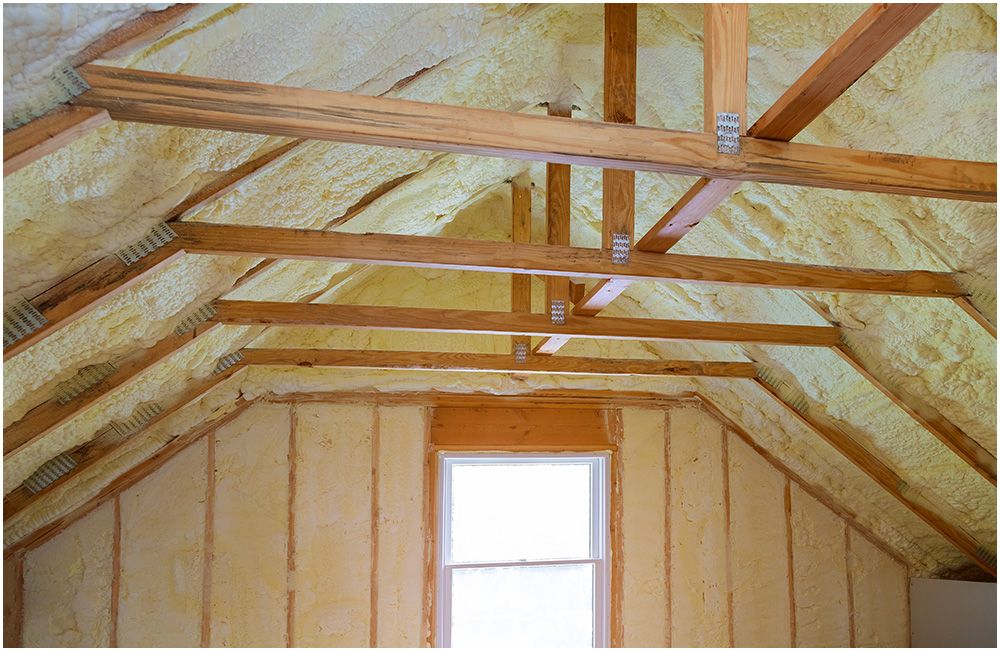
‘Deep renovation’ could cut EU energy demand by 44 per cent
The EU could see a massive reduction in energy demand if it were to upgrade the insulation in all residential buildings, according to a new study from BPIE (Buildings Performance Institute Europe).
Download the report: How to stay warm and save energy: Insulation opportunities in European homes
It found that improved insulation of all EU residential buildings would result in a reduction of energy demand for heating in buildings by 777 TWh, or 44 per cent compared to 2020: 46 per cent in gas savings, 44 per cent in heating oil savings and 48 per cent in coal savings.
In its analysis, BPIE modelled two renovation scenarios until 2050: The 2% Renovation scenario and the Full Renovation scenario.
The 2% Renovation scenario follows the goal renovation rate prescribed by the European Commission in the Renovation Wave Strategy and assumes that a 2 per cent renovation rate is reached by 2030 and remains at that level until 2050.
The Full Renovation scenario assumes that after 2030 the average renovation rate (now at 1 per cent) will continue to grow at the speed needed to renovate all existing residential buildings before 2050.
The analysis shows that achieving a stable 2 per cent renovation rate is insufficient to achieve EU climate goals and significantly contribute to energy independence. Under this scenario, 30 per cent of buildings will be left unrenovated by mid-century and 235 TWh of potential final energy savings will be wasted.
“The results speak for themselves,” says Oliver Rapf, BPIE executive director. “Buildings must be treated as vital infrastructure contributing to EU energy security and climate neutrality. Deep renovation should be one of the EU’s highest priorities facing the energy crisis.”
The report concludes that for the EU to fully benefit from the savings potential (777 TWh), the entire residential building stock must be renovated.
To reach EU climate neutrality goals by 2050, this means the current renovation rate of 1 per cent must be at least doubled by 2030, reach 3 per cent by 2035, and 4 per cent by 2040. Achieving this level of ambition means that EU building policies must carefully align short-term actions with long-term needs and ambitions.
“Building renovation activity must seriously ramp up in this decade,” continues Rapf. “The final negotiations of the EPBD in the coming months should define deep renovation as the standard and agree renovation requirements which deliver on this standard, are fair and backed by attractive financial support for all who need it.”
The report concludes that the EPBD recast should require that financial programmes and advisory services prioritise projects achieving deep renovations. Minimum Energy Performance Standards (MEPS) should be designed on a differentiated basis according to ownership structure, and focus on worst-performing buildings across all segments first. Even in a step-by-step approach, all renovations and especially the first step should pull the building out of the worst-performing category. Public funds including emergency relief, recovery funds and subsidy schemes should all be designed towards supporting deep renovations of buildings. Member States should not wait for a ban of fossil fuel boilers to be introduced by the EPBD, and should stop fossil fuel subsidies immediately.

